
Explore our workshops
Practical skills start here.Choose a workshop to explore its curriculum, learning outcomes, and the hands-on work your students will take on.
Real-world practice.
YOUR SELECTED WORKSHOP
Coding-Debugging Foundation
Build a strong foundation through visual debugging and hands-on problem-solving.
Make the logic visible.
Learn C++ fundamentals through step-by-step debugging, mathematical and pattern problems, arrays, and strings.
Choose a workshop duration
The depth and number of problems adapt to your students' learning pace.
Build C++ foundations with visual debugging.
Work through patterns, mathematical problems, arrays, and strings.
Longer formats may include Java and Python comparisons and an introduction to OOP.
Three days. From your first commit to team collaboration.
Program duration is fixed. Learners practice Git locally and use GitHub for the main collaborative exercises.
DAY 01 Git fundamentals & first GitHub repository
- What Git is, how version control works, and how Git differs from GitHub.
- Set up Git, create a repository, clone an existing repository, and configure a remote.
- Practice
status,add,commit,log,diff, andpush. - Use
.gitignoreand publish a small project to GitHub.
DAY 02 Branches, pulling changes & team workflow
- Create, switch, and push feature branches.
- Practice
fetchversuspull, and merge branch changes. - Open a GitHub pull request, review a teammate's changes, and merge a PR.
- Pair exercise: two learners collaborate on one repository without overwriting each other's work.
DAY 03 Merge conflicts, recovery & Git platforms
- Reproduce a real merge conflict; read markers and resolve it safely in an editor.
- Correct mistakes using
restoreandrevert; explain when to avoid destructive resets. - Compare GitHub, GitLab, and Bitbucket, including pull requests versus GitLab merge requests.
- Final team challenge: feature branches → pull request → deliberate conflict → resolution → reviewed merge.
Practical outcome: Each learner experiences a working Git repository, a feature branch, a reviewed change, and a resolved merge conflict. The scope of exercises can be adjusted to the group's pace.
Three days. Four small, working systems. Real Java OOP.
Build domain objects that protect their state, manage them in collections, and evolve their designs through inheritance, abstraction and polymorphism. This is code-first learning, not diagram-only theory.
Each concept begins with a real problem in code. Learners see what breaks without the concept, implement a better design, and test the behavior.
DAY 01 Objects, encapsulation, validation & Object methods
- Build a
Studentobject with real properties: ID, name, phone number and marks. Understandnew, references and object state. - Use
privatefields, controlled getters/setters, overloaded constructors and constructor validation. Keep invalid state out of an object. - Enforce rules: phone numbers must contain exactly 10 digits; marks stay between 0 and 100; reject invalid updates with clear errors.
- Expose a read-only
getGrade()calculated from marks: ≥80 = A, ≥60 = B, ≥40 = C, otherwise F. Never providesetGrade(). - Explain
toString(),equals(), andhashCode()using real Student instances, stable student IDs and duplicates. - Hands-on: create students; test valid/invalid inputs and grade boundaries; compare objects by identity vs logical equality.
Student s = new Student("ST101", "Asha", "9876543210", 82);
s.getGrade();      // A  — computed from marks, no setter
s.setMarks(61);
s.getGrade();      // B  — automatically reflects the change
s.setPhone("123"); // Rejected: requires exactly 10 digits
DAY 02 Collections, CRUD & inheritance in four projects
- Handle multiple objects with
List,MapandSet. Explain when order, key-based lookup and uniqueness matter. - Implement add, find, filter, update and delete operations in memory; handle missing records and duplicate IDs.
- Discover single, multilevel and hierarchical inheritance as concrete projects grow, using
extendsandsuper. - Understand why Java does not allow multiple superclass inheritance; multiple-interface capabilities are introduced on Day 3.
- Hands-on: complete four focused, starter-scaffolded management-system exercises instead of drawing unrelated class diagrams.
Student Records
Person → Student
Employee Directory
Person → Employee → TeamLead
Bank Account Manager
BankAccount → Savings / Current
Library & Lending
LibraryItem → Book / Laptop
DAY 03 Abstraction, interfaces & polymorphism by refactoring
- Refactor the four mini-projects with meaningful
abstractbase classes andinterfacecontracts, keeping existing behavior intact. - Override business methods in child classes; demonstrate dynamic dispatch through a base-class or interface reference and mixed-object collections.
- Separate contracts from implementation: for example, an in-memory repository behind a repository interface; consumers depend on the contract.
- Show multiple interface implementation in the library system (
BorrowableandTrackable), not impossible multiple class inheritance. - Contrast method overloading with overriding, and prefer composition when a relationship is not truly is-a.
- Final challenge: learners extend one project with a new type without rewriting existing business logic, then demonstrate CRUD, validation and polymorphism.
Practical outcome: Four functional in-memory Java mini-systems, tested validation rules and equality behavior, collection-based management operations, and an end-to-end abstraction/polymorphism refactor. Training is instructor-guided; exercise depth is adjusted to the group's Java experience.
From working code to better engineering design.
Explore practical design decisions, SOLID principles, and the design patterns organized in CodingMaxima's Low-Level Design course. Workshop duration is fixed at three days.
Real Java application behavior comes first. Diagrams are supporting tools, not the workshop's main activity.
DAY 01 SOLID principles & designing for change
- Recognize tightly coupled classes, duplicated behavior and responsibilities that are difficult to maintain.
- Understand Single Responsibility and Open/Closed through the evolution of working code.
- Apply Liskov Substitution, Interface Segregation and Dependency Inversion to improve class interactions.
- Refactor existing Java application code into clearer responsibilities and replaceable dependencies.
DAY 02 Creational & structural design patterns
- Understand when object creation becomes a design concern: Singleton, Factory, Abstract Factory, Builder and Prototype.
- Explore composition and integration using Adapter, Decorator and Facade.
- Compare suitable patterns against simpler alternatives, using existing CodingMaxima application examples.
- Practice selected patterns hands-on; additional patterns are introduced through guided demonstrations as time permits.
DAY 03 Behavioral patterns & complete design thinking
- Explore behavior-driven design through Strategy, Observer, State and Chain of Responsibility.
- Improve changeable business logic, event-driven interaction and conditional workflows.
- Combine SOLID and selected patterns to refactor an existing application design without unnecessarily increasing complexity.
- Review design decisions, trade-offs and how to explain a low-level design clearly.
Expected learning outcome: Learners can recognize common design problems, select suitable SOLID principles and patterns, and explain why a refactored Java design is easier to extend, test and maintain.
From your first REST endpoint to real Spring Boot applications.
Start with Spring Boot and MySQL. Add production-oriented API practices, frontend integration, authentication and enterprise concepts as the workshop duration increases.
Choose the duration that fits your students. Each additional day expands the hands-on scope; the complete course is not compressed into the shortest format.
Topics expand to match your selected duration. Open each day for its focus areas.
Practical Spring Boot learning with existing CodingMaxima projects.
Build the fundamentals. Grow your problem-solving skills.
Start with the essentials, then use additional days to practice more deeply and explore advanced algorithms.
Choose a workshop duration
Each additional day adds a focused topic or guided practice. Select a day below to see the learning plan.
Open each day to see its focus and selected exercises.








Code and Project Debugging Animations
First time in the history CodingMaxima teaching all programming languages and frameworks with the visulalizations by debugging animations in training and workshops.
- All
- Java Back-end
- Python
- MySQL
- JavaScript
- Springboot
- HTML-CSS
Team & Mentors of CodingMaxima
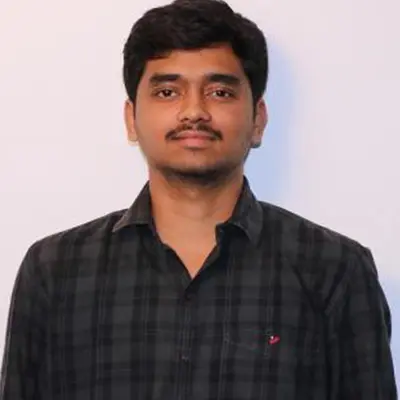
Vamsi Krishna
Senior Software Developer in JPMorgan Chase & Co
Vamsi is a Software Engineer with skills in both front end and backend having enthusiasm to learn new things and very good mentor to guide juniors and student.
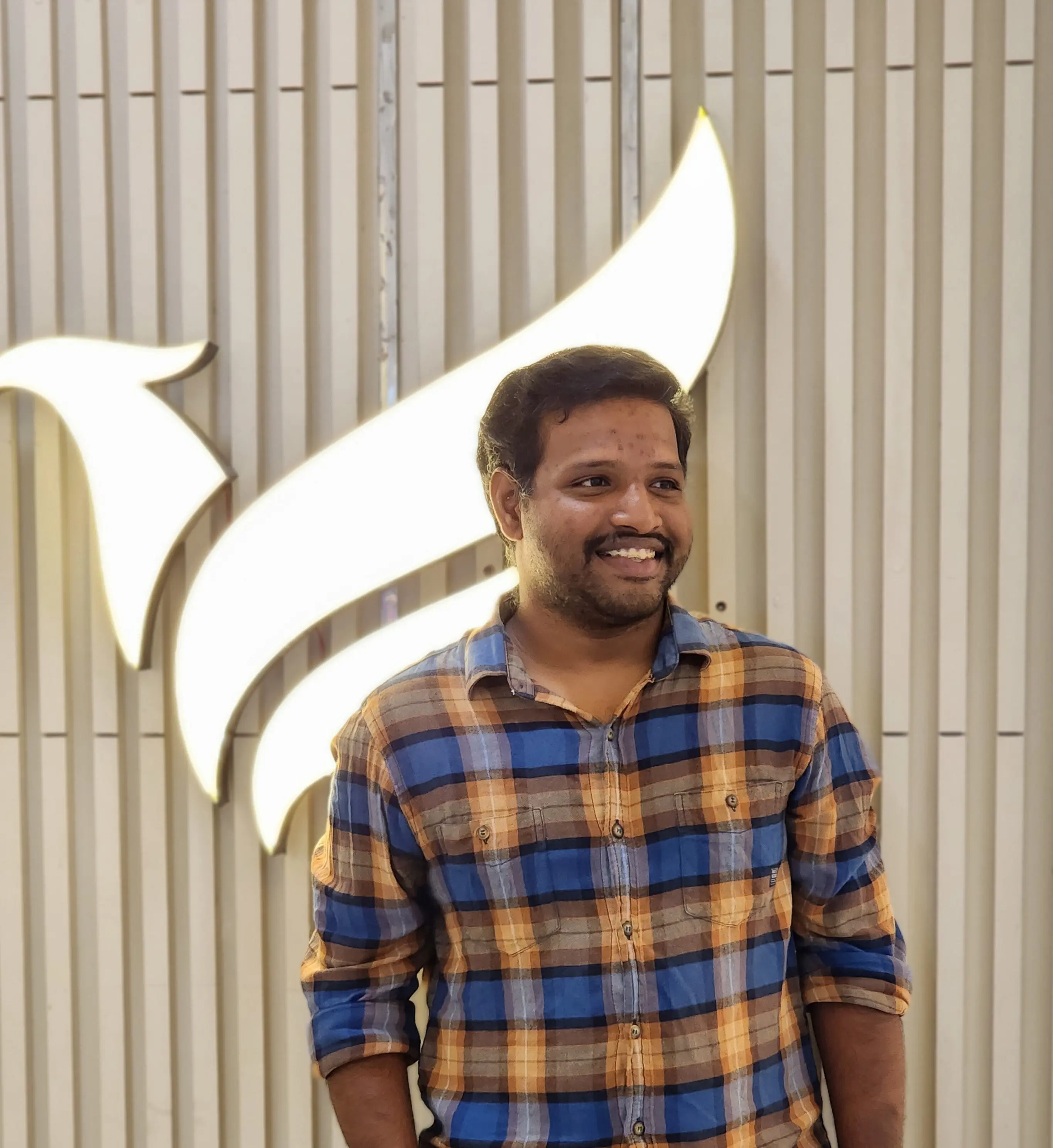
Kumar Rajendra Mallina
Founder of CodingMaxima
Application Developer - Ex.Oracle
Founder of codingmaxima and Software Engineer with a demonstrated history of working in the information technology and services industry.

Akil
Software Engineer-II in Microsoft
Akhil is Pro coder and Startup enthusiast working as a Software Engineer-II in Microsoft. He has strong knowledge in coding, interview preparation and trainings.

Dr.Venkatesh Maganti
Associate Professor
Awarded Ph.D. by Hindustan Institute of Technology & Science. He has 18 years of teaching experience. He has publications in Scopus, SCI-indexed Journals. He presented at National and International conferences.
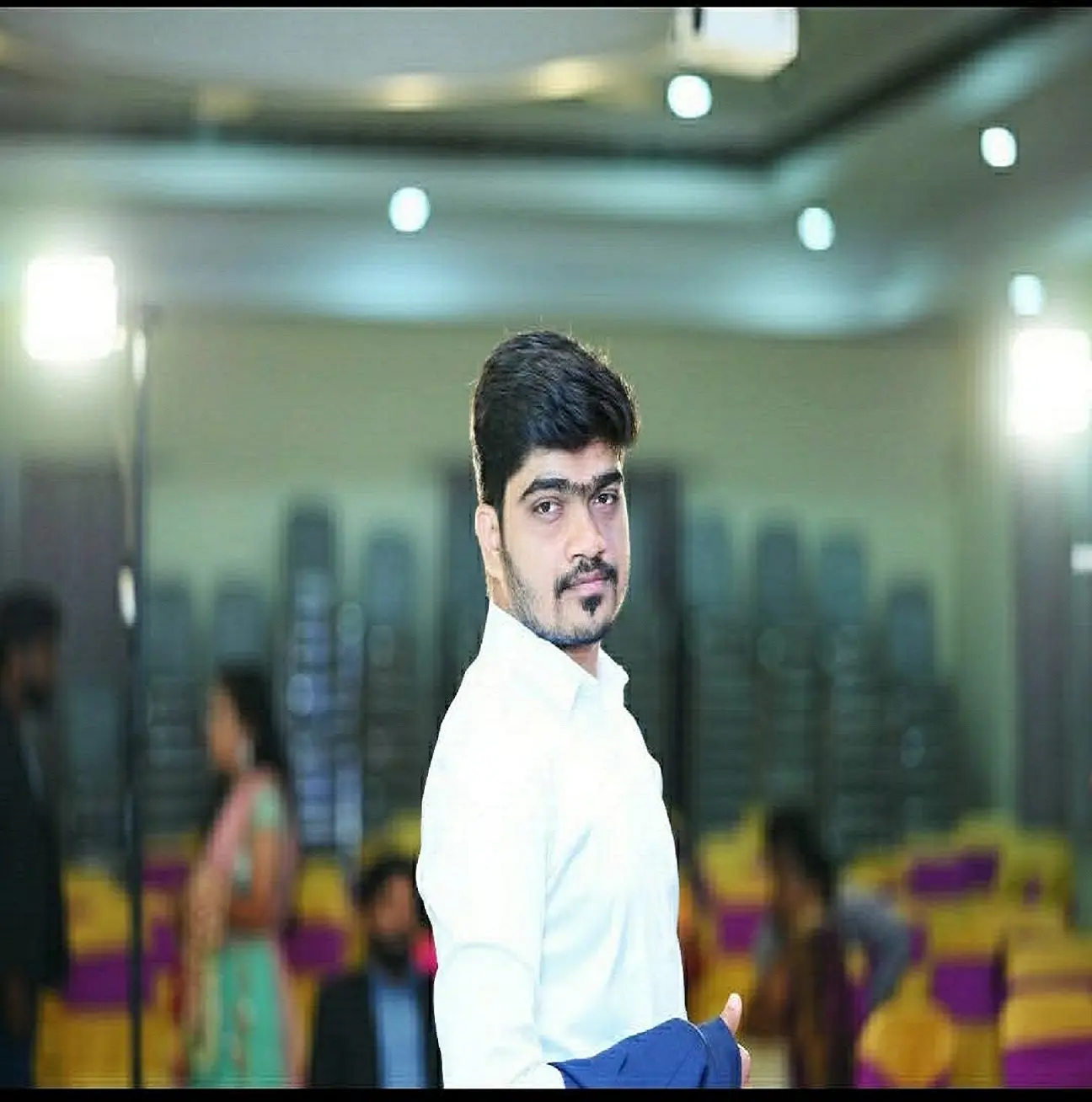
Sahas.K
Software Engineer - Ex.Amazon & Ex.Oracle
Sahas have been working as back-end developer with high knowledge of system design & data structures. He will be discussing the different types of interview questions that have been asked in companies.
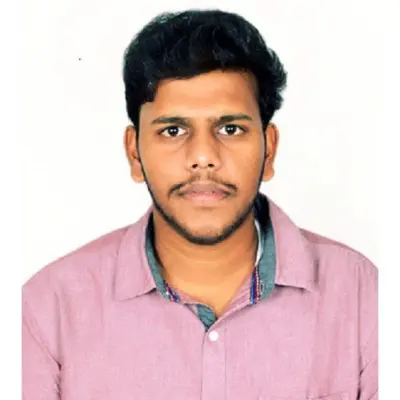
Veera Reddy
Senior Software Front-end Developer - Ex.EPAM
Veera Reddy is a front-end Developer specializing in Angular & React. With a track record of building engaging and scalable web applications and he has 6+ years of experience in the front-end.

Vedvrat Lodhi
Senior Software FullStack Developer - EPAM
Java certified associate , currently working with epam systems as Full Stack Developer. Tech stack web and desktop application using .net node js. He has very good knowledge in various technologies like Java, .net and Java Script frameworks like node js and react.
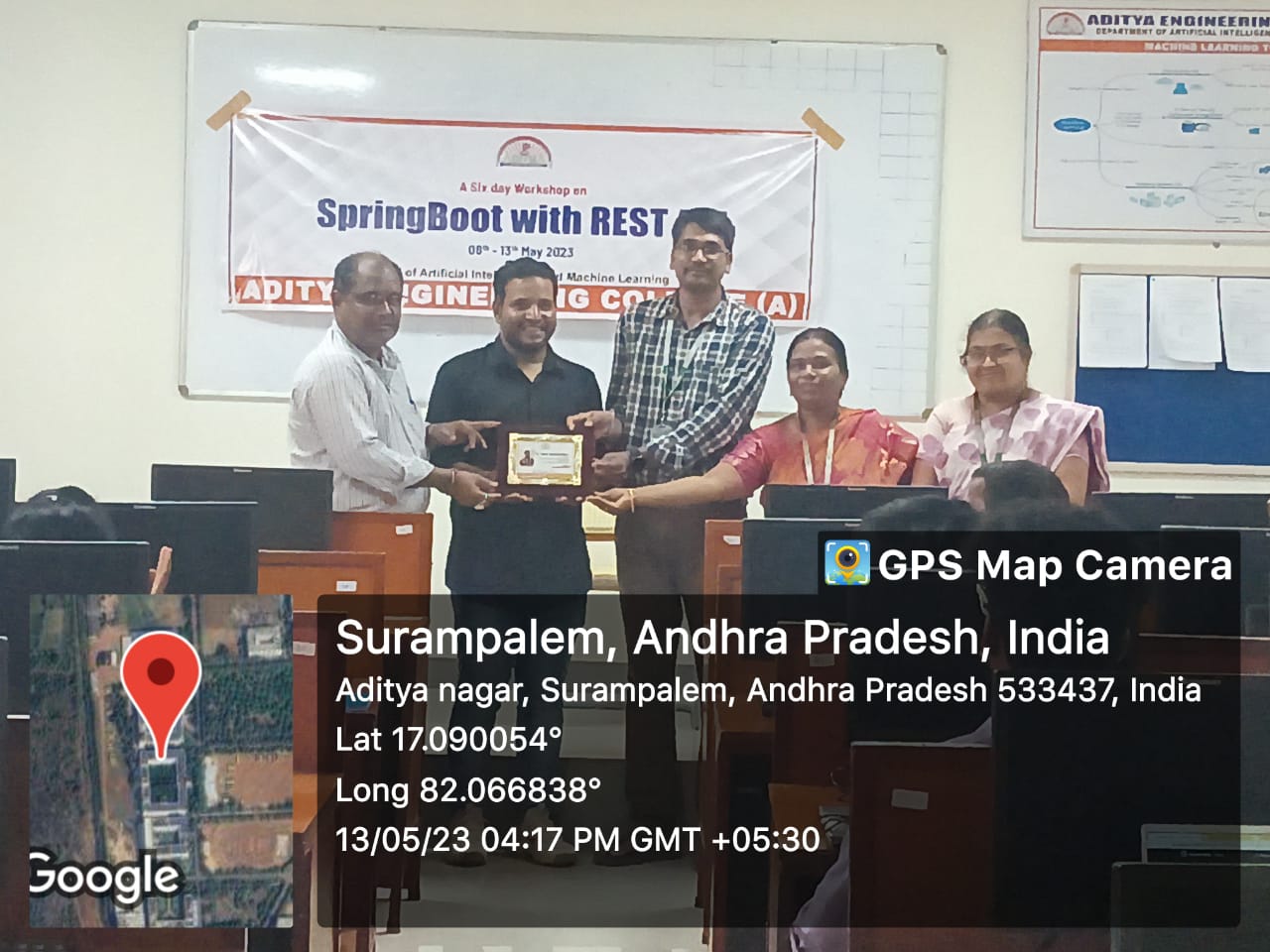
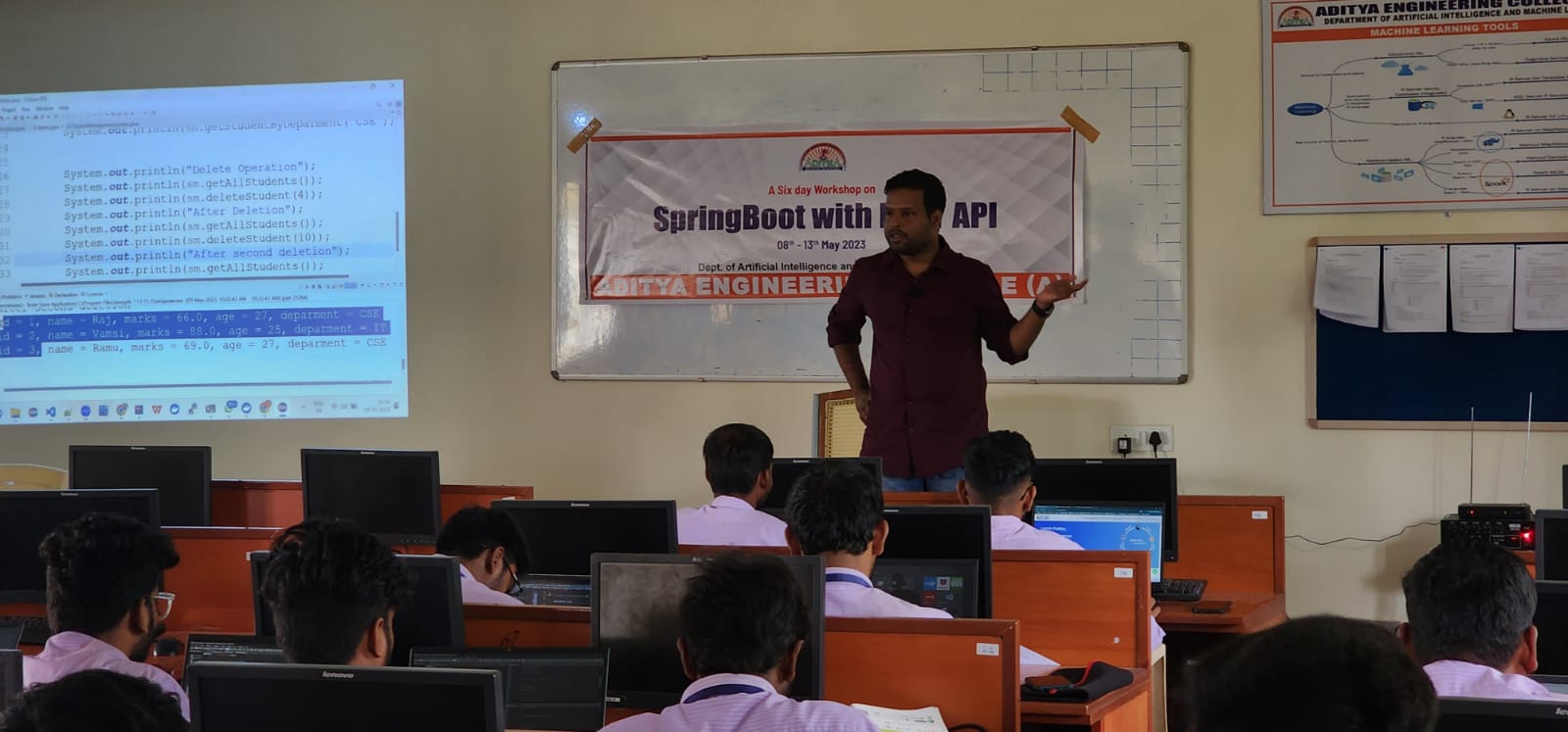
Our Previous Workshops Gallery
Welcome to our Workshops Gallery, where learning meets inspiration! Browse through a collection of transformative workshops designed to propel your skills and knowledge to new heights. From mastering coding languages to exploring cutting-edge technologies, each workshop is a unique opportunity to engage with industry experts, gain hands-on experience, and join a community of like-minded learners.
Contact
You can connect to our Email or Whats-App to conduct workshops and trainings in your organization.